
Make your service requirement the best thing your students do.
A peer-led media literacy program. We train older students to lead younger grades — turning service requirement into real leadership, real media literacy, and documented hours, all on campus.

The challenges keep changing.
The virtues that meet them don't.
Beyond Bans
A phone ban quiets the school day — a good start. But the ban stops at the gate, and most of a student's media life happens on the other side of it. Virtues travel: into their group chats, their homes, the rest of their lives.
We don't chase the app of the moment. In our educator workshops, teachers mapped the media challenges they actually see to the gem that meets each one.
What teachers said they’re up against
Unravel the gem they mapped it to!
Drawn from Shiny Gems educator workshops.
-
Truthfulness
-
Friendship
-
Beauty
-
Moderation
-
Creativity
-
Determination
-
Responsibility
Why it works
Why media
Math has a teacher, a curriculum, and a test. Media literacy usually has none of those — yet it's where young people spend the most time and are least equipped to navigate. A growing number of states now require it, but most schools have no trained teacher and no room in the schedule. Shiny Gems meets that need without adding a class or a subject to your teachers' load.
Why peers
Media habits are shaped by identity and belonging, not facts. A peer only a few years older reaches a child in a way an adult lecture never will — when a 16-year-old admits "I struggle with scrolling too," a 10-year-old listens. Peer delivery isn't a nice-to-have; it's the mechanism.
Why “gems”
Every student already carries hidden gems — character strengths like creativity, patience, and responsibility. We build media literacy on them because character is teachable by a teenager, it never goes obsolete when the platform changes, and it delivers the growth your school already promises families.
It worked in the classroom — for both age groups.
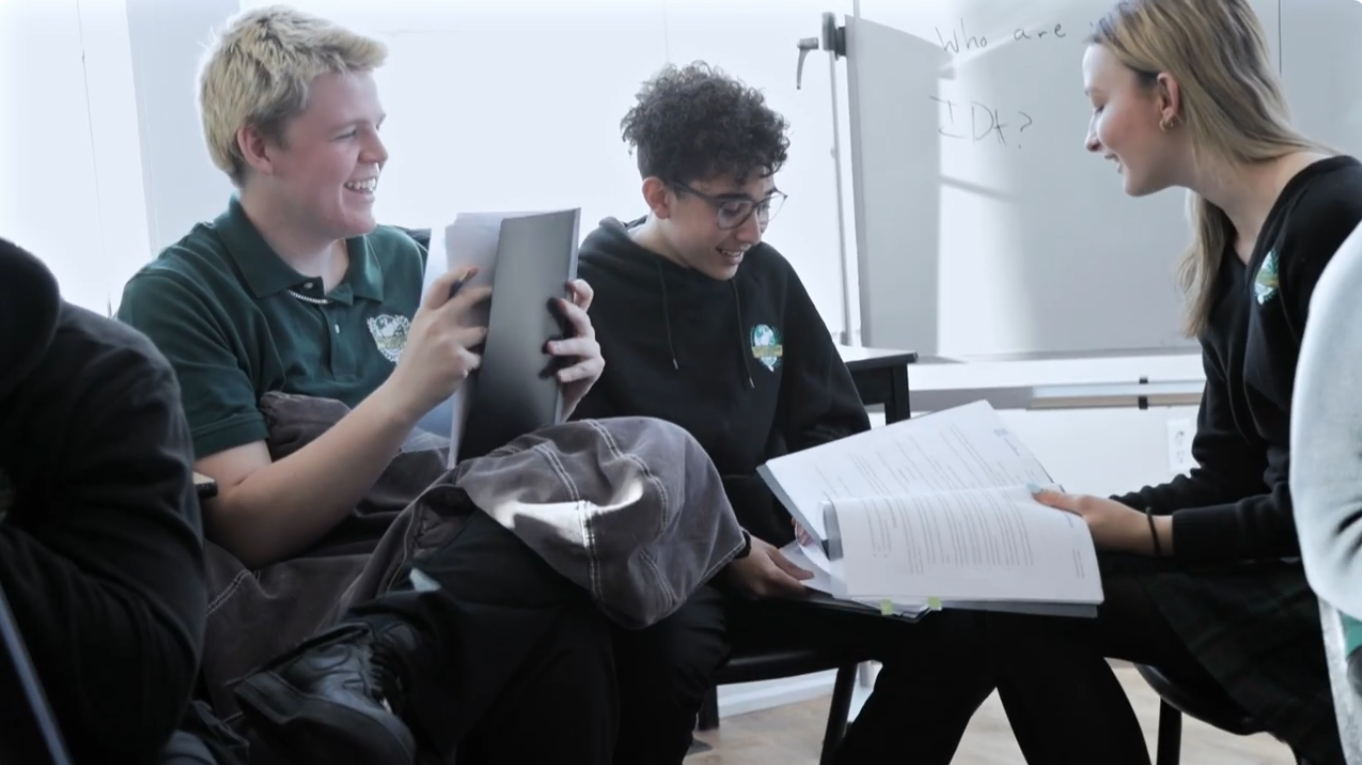
Watch: students on their own words
“It's much more important to be a good friend than to look beautiful.”
A Grade 5/6 student, on beauty and social media
45
Student facilitators (Grades 11–12)
113
Students reached (Grades 4–10)
10-12 wk
3 classes, one semester
"A highlight of the week" — students in both schools
At Nancy Campbell Academy, 45 older students led 113 younger ones — 81 at a nearby elementary school and 32 at their own — through media literacy built on character strengths. Students in both schools called the sessions a highlight of their week, and many began changing real habits: less screen time (one documented drop of about five hours a day), tighter privacy settings, more time off their screens. The facilitators grew as much as the students they taught — two transformations from one program.
PARTNERSHIPS
Invited to speak and train teachers for
Educators rated our AMS teacher workshops an average of 4.7 out of 5 (22 participants across two sessions).
One semester. 25–30 documented service-learning hours. Two groups transformed.
Shiny Gems is built as service-learning from the ground up: one semester gives each older student roughly 25–30 documented, reflection-rich hours, with the plan → act → reflect structure and paperwork built in. Your older students grow as leaders, your younger ones learn to navigate media with intention — and because your students lead it, you don't need faculty-wide buy-in to start.

Together, let's help the next generation shine
A 15-minute call is enough to see whether it fits your program. We'll ask how your service-learning works today, and show you what a semester could look like.