
Shiny Gems at Nancy Campbell Academy
CASE STUDY
A peer-led media literacy program, delivered as service-learning.
“It's much more important to be a good friend than to look beautiful.”
A Grade 5/6 student, reflecting on beauty and social media
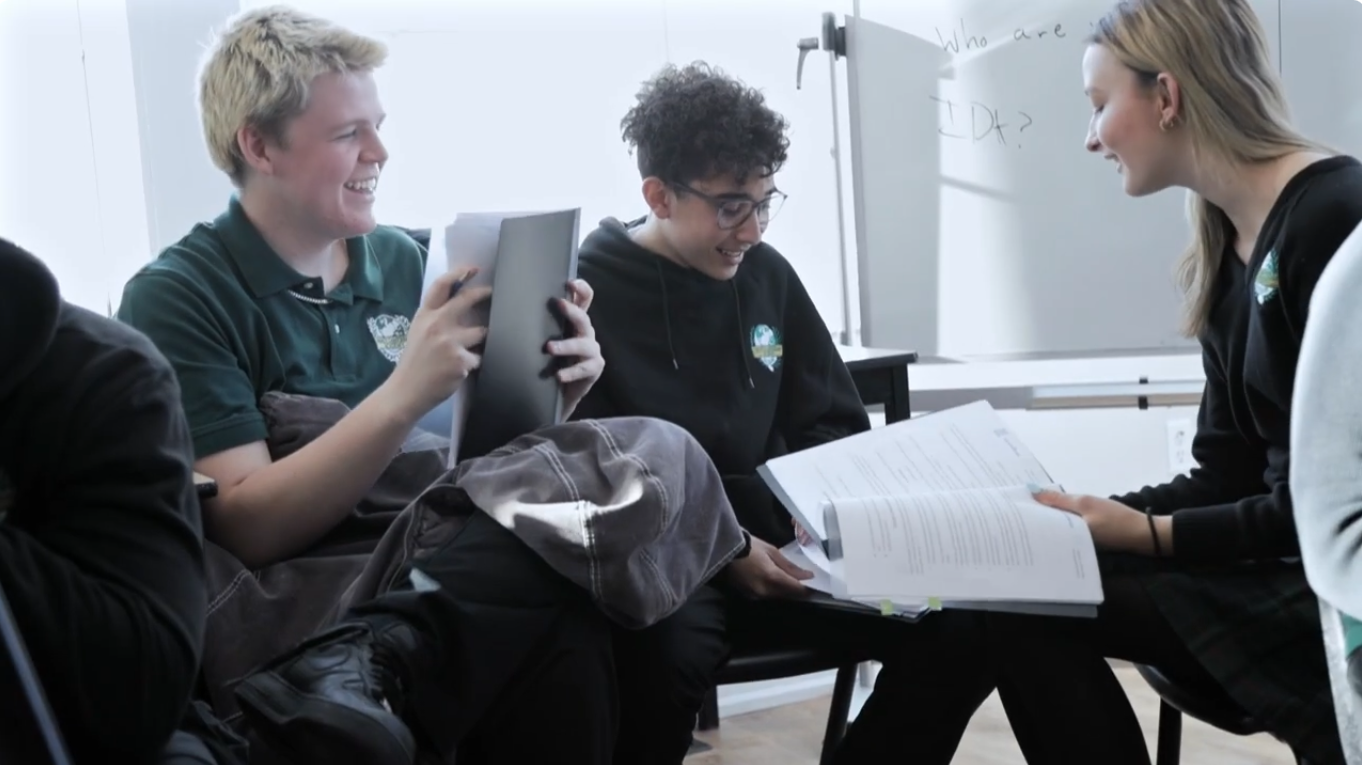
The students, in their own words · Nancy Campbell Academy
45
Facilitators
High-School students, Grades 11-12
113
Students reached
81 at a nearby elementary school (Gr. 4–6), 32 within NCA (Gr. 6–10)
10-12 wk
Duration
March–May 2026
2
Sites
Nancy Campbell Academy (Ontario), plus a nearby elementary school
As part of NCA's World Citizenship service program, older students were trained as Shiny Gems facilitators, then led younger students through lessons built around the gems — creativity, beauty, hope, patience. They went weekly to a nearby elementary school and also worked with younger students at NCA. Each session combined games, small-group discussion, and hands-on creative projects.
The program
Two transformations, one program
The outcome the school didn't expect: it changed the facilitators as much as the children they taught. The older students grew in leadership and self-awareness; the younger ones gained real media literacy. That's what sets it apart from a standard service project.
What changed for the younger students
Real habit change
As trust grew, several students started changing their tech habits. One's daily screen time dropped by about five hours. Another set his gaming account to private — in his facilitator's words, he deserved to feel safe online. Others described watching less TV, or choosing family and friends over screens.
Deeper thinking, in their own words
On excellence, students moved from wanting to be the best toward seeing that excellence helps everyone do their best together. On beauty, they began discussing love, friendship, and family rather than filtered images.

From passive to active
On excellence, students moved from wanting to be the best toward seeing that excellence helps everyone do their best together. On beauty, they began discussing love, friendship, and family rather than filtered images.
What changed for the facilitators
The facilitators called the sessions a highlight of the week, and grew more conscious of their own media habits. The mechanism was peer honesty: when one admitted she struggles with scrolling too, younger students opened up and began changing their habits.
“I think this meant a lot more to them than sound bites about how bad technology is.”
A Shiny Gems facilitator
Why it works
Media habits are shaped by identity and belonging, not facts — so a trusted peer only a few years older reaches a child in a way an adult lecture can't. Anchoring each lesson in a character strength makes the content teachable by a teenager and relevant to any platform, this year or next.
What we learned, and are improving
Field feedback was candid: some discussion questions were too complex for the youngest or least-confident students. We're simplifying wording, adding short introductions and scaffolding, and building in direct prompts about students' own media use. Every cohort makes the curriculum sharper.
What this could look like at your school
In a K–12 school, older grades serve younger ones under one roof — no outside partner needed. One semester gives each facilitator roughly 25–30 reflection-rich service-learning hours, with the structure and documentation built in.